
The Campus Looks Inward
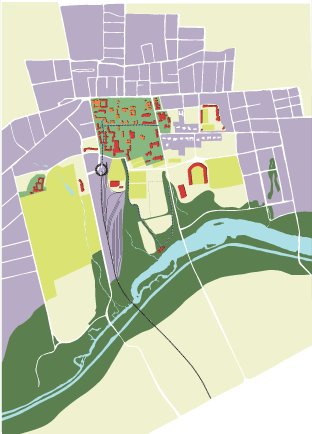
A major building program in the early 20th century was initiated by President Woodrow Wilson (1901-1912) and overseen by Ralph Adams Cram, supervising architect. In addition to new buildings, Lake Carnegie was created and the railroad (Dinky) station was relocated to the south.
Princeton was one of the first universities to undertake a master plan for its future growth. Wilson and Cram shared a vision for the campus that shifted away from the outward-looking and expansive landscape of the McCosh era to a more enclosed arrangement of buildings, influenced by the architecture and scholarly seclusion of Oxford and Cambridge and emphasizing academic discourse among faculty and students.

Collegiate Gothic is a "return step by step to the old ideals and sound methods of English colleges…to those…eternally enduring principles in life and thought and aspiration…"
Ralph Adams Cram, 1914.


Images: Graphic Arts Collection and University Archives, Department of Rare Books and Special Collections, Princeton University Library. Courtesy of The Historical Society of Princeton.
Photos: Courtesy of the Princeton University Office of Communications.
© 2006 The Trustees of Princeton University Last update: November 2, 2006